



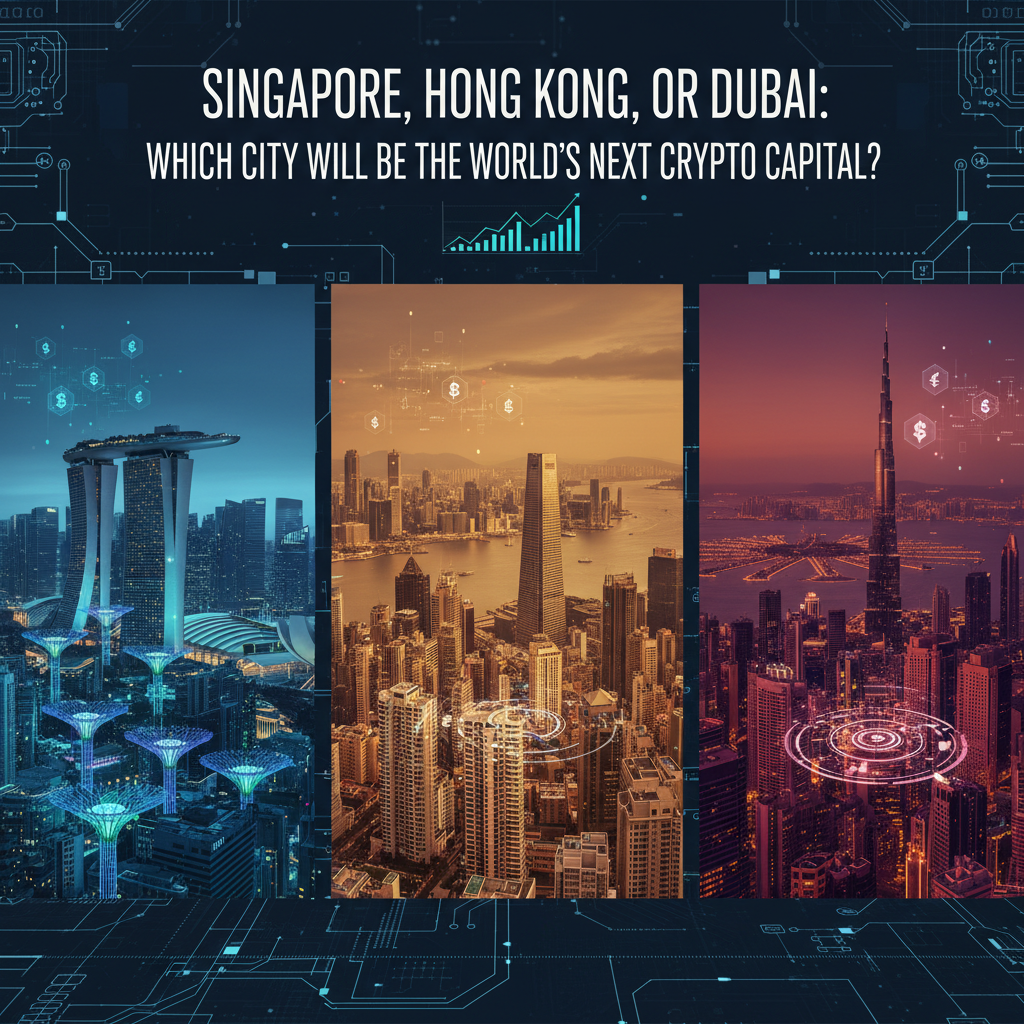

The Global Race for Crypto Dominance
The pursuit of becoming a global crypto capital isn’t merely about prestige; it’s about securing a significant slice of the future digital economy. Governments and financial authorities recognize the immense potential of blockchain technology to drive innovation, create jobs, and attract substantial foreign investment. By fostering a welcoming environment for digital asset companies, these cities aim to diversify their economies, enhance their technological prowess, and reinforce their positions as leading financial hubs in the 21st century. The competition is intense, with each jurisdiction tailoring its policies and infrastructure to appeal to different facets of the crypto industry, from institutional funds to Web3 startups.
Singapore: The Established Innovator
Singapore has long been lauded as a beacon of financial stability and technological innovation in Asia. Its approach to cryptocurrency has been characterized by a blend of caution and forward-thinking regulation, primarily spearheaded by the Monetary Authority of Singapore (MAS).
Regulatory Framework: Proactive and Prudent
Singapore’s regulatory framework, particularly the Payment Services Act (PSA), requires all entities dealing in Digital Payment Tokens (DPTs) to be licensed. While stringent, this clarity has provided a level of certainty that many traditional financial institutions and large crypto players appreciate. MAS has shown a clear preference for institutional-grade projects, emphasizing strong anti-money laundering (AML) and counter-terrorist financing (CTF) measures. The recent introduction of new rules to safeguard retail investors further underscores its balanced approach, aiming to foster innovation while protecting consumers.
Ecosystem & Incentives: Deep-Rooted Support
The city-state boasts a mature and sophisticated financial ecosystem, abundant venture capital, and a highly skilled talent pool. Government initiatives like Enterprise Singapore actively support fintech and Web3 startups through grants, incubators, and partnerships. This robust infrastructure makes Singapore an attractive base for serious, long-term players in the crypto space, including exchanges, asset managers, and blockchain development firms.
Strengths and Challenges
- Strengths: Regulatory clarity and stability, strong financial infrastructure, access to a vast talent pool, proactive government support for innovation, a reputation for trustworthiness.
- Challenges: High compliance costs and stringent requirements can deter smaller startups; a perceived bias towards institutional players may limit retail crypto activity; competitive talent market.
Hong Kong: The Re-Emerging Giant
Once a thriving crypto hub, Hong Kong experienced a period of uncertainty due to evolving regulatory stances. However, the Special Administrative Region has recently made a remarkable comeback, demonstrating a renewed commitment to embracing digital assets and positioning itself as a gateway to both global and mainland Chinese markets.
Regulatory Framework: A Fresh Embrace
The Securities and Futures Commission (SFC) of Hong Kong has introduced a comprehensive licensing regime for Virtual Asset Trading Platforms (VATPs), allowing retail investors to trade major cryptocurrencies on licensed exchanges. A significant development has been the approval of Spot Bitcoin and Ethereum ETFs, marking a pivotal moment and signaling a strong regulatory endorsement for digital assets within the traditional financial system. This move places Hong Kong ahead of many global jurisdictions in terms of institutional product offerings.
Ecosystem & Incentives: Strategic Gateway
Hong Kong’s traditional strengths as a global financial center – deep capital markets, rule of law, and strategic geographical location – provide a fertile ground for crypto growth. The recent regulatory pivot aims to leverage these strengths, attracting both local and international crypto businesses. Its unique position as a bridge to mainland China, despite existing crypto prohibitions there, offers long-term potential for capital flow and market access, albeit indirectly.
Strengths and Challenges
- Strengths: Deep financial market expertise, strategic link to mainland China, clear regulatory framework for retail and institutional crypto products, supportive government policies to regain crypto relevance, innovative ETF approvals.
- Challenges: Lingering political uncertainties, competition from other Asian hubs, need to rebuild trust and attract talent after previous regulatory tightening.
Dubai & UAE: The Ambitious Challenger
The United Arab Emirates, particularly Dubai and Abu Dhabi, has emerged as an aggressive and highly ambitious contender in the race for crypto supremacy. Its rapid adoption and welcoming stance have drawn a significant influx of crypto businesses and talent.
Regulatory Framework: Forward-Thinking and Agile
Dubai established the Virtual Assets Regulatory Authority (VARA), an independent body specifically dedicated to overseeing virtual assets. VARA’s framework is progressive and comprehensive, covering everything from issuance to trading and custody, designed to foster innovation while ensuring market integrity. In Abu Dhabi, the Abu Dhabi Global Market (ADGM), an international financial free zone, has also developed its own robust regulatory framework for virtual assets, offering a ‘common law’ jurisdiction that appeals to international firms.
Ecosystem & Incentives: Business-Friendly and Diverse
The UAE’s appeal lies in its highly business-friendly environment, which includes free zones like the Dubai Multi Commodities Centre (DMCC) and Dubai World Trade Centre (DWTC), offering attractive tax regimes (including no personal income tax), ease of company formation, and state-of-the-art infrastructure. The government actively promotes blockchain adoption across various sectors, creating a diverse ecosystem for crypto exchanges, NFT marketplaces, DeFi protocols, and Web3 gaming companies.
Strengths and Challenges
- Strengths: Highly proactive and welcoming regulatory stance, attractive tax environment, significant government backing for blockchain initiatives, rapidly growing and diverse crypto ecosystem, strong appeal to international talent and startups.
- Challenges: Regulatory fragmentation across different emirates and free zones can sometimes create complexity; a relatively newer ecosystem compared to traditional financial hubs, requiring time to build depth in talent and capital markets; potential for ‘regulatory arbitrage’ due to varied rules.
Key Differentiating Factors in the Race
While all three cities share the ambition of becoming a crypto capital, their strategies and inherent advantages create distinct differentiating factors:
- Regulatory Approach: Singapore offers a refined, cautious approach for institutional players. Hong Kong has made a bold pivot, embracing retail and institutional products alike. Dubai provides a nimble, business-friendly framework focused on rapid growth and diverse innovation.
- Market Access & Influence: Hong Kong’s unparalleled access to the Greater Bay Area and potential future links to mainland China’s vast market is a unique asset. Singapore serves as a strategic gateway to Southeast Asia. Dubai is positioning itself as a hub connecting Europe, Asia, and Africa.
- Talent and Innovation: Singapore has a deep, established talent pool in traditional finance and growing Web3 expertise. Hong Kong is rekindling its talent base. Dubai is aggressively attracting global talent with lucrative incentives and a vibrant lifestyle.
- Tax Environment: The UAE offers significant tax advantages with no personal income tax and competitive corporate tax rates (though corporate tax has been introduced). Singapore has a favorable corporate tax regime with various incentives. Hong Kong also boasts a low-tax regime.
- Government Vision: All three have clear government support, but the intensity and specific focus vary. Dubai’s approach is highly entrepreneurial and rapid; Singapore’s is measured and strategic; Hong Kong’s is a deliberate re-engagement.
Predicting the Next Crypto Capital
There might not be a single ‘winner’ in this dynamic race, but rather a specialization among these leading contenders. Each city is likely to carve out its niche, appealing to different segments of the crypto industry.
- Singapore is poised to remain a strong contender for institutional players seeking regulatory certainty, financial stability, and a sophisticated ecosystem for large-scale digital asset management and trading.
- Hong Kong, with its recent progressive moves, especially in spot ETFs, is rapidly re-establishing itself as a critical gateway for both institutional and retail investors into Asia, potentially becoming a primary bridge between East and West in digital finance.
- Dubai is quickly becoming the go-to hub for Web3 startups, blockchain innovation, and diverse crypto businesses, particularly those seeking an agile regulatory environment and strong government backing for growth. Its ‘free zone’ model allows for rapid experimentation and scaling.
Ultimately, the title of ‘crypto capital’ could be shared, or it could fluctuate as regulatory landscapes evolve and market demands shift. What’s clear is that the competition is driving innovation and creating more robust, globally connected digital asset ecosystems, benefiting the entire industry.


 By
By