



The NVIDIA Effect: Fueling the AI Revolution
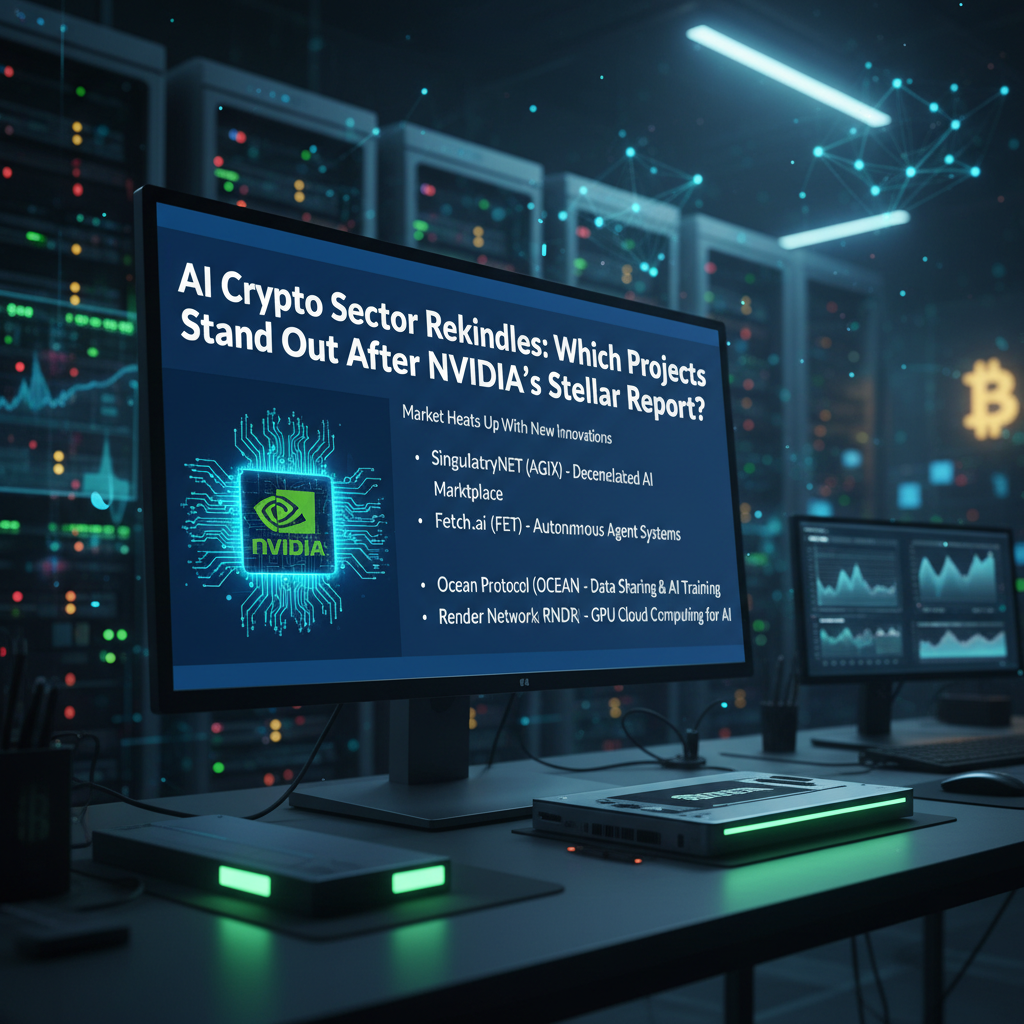
NVIDIA’s recent financial reports have sent ripples across global markets, underscoring the explosive growth and insatiable demand for AI computing power. As the leading provider of Graphics Processing Units (GPUs) – the very backbone of modern AI training and inference – NVIDIA’s unprecedented success serves as a powerful barometer for the broader AI industry. This isn’t just about high-tech hardware; it’s about the fundamental infrastructure enabling advancements in everything from large language models to autonomous driving and drug discovery.
For the cryptocurrency market, NVIDIA’s prosperity is a critical signal. The sheer volume of computational resources required for AI development creates immense opportunities for decentralized networks that can efficiently allocate, monetize, and secure these resources. When NVIDIA’s stock soars, it validates the immense capital flowing into AI, naturally extending investor interest to the crypto projects positioned to facilitate this technological revolution. These projects often focus on democratizing access to computing power, secure data sharing, and creating open-source AI models, offering a decentralized alternative to traditional, centralized AI infrastructure.
Why AI and Crypto are a Powerful Pair
The synergy between Artificial Intelligence and blockchain technology is more profound than a mere speculative trend. They complement each other in several fundamental ways:
- Decentralized Computing Power: AI models require vast computational resources. Crypto networks can aggregate idle GPU power from a global network, offering a more resilient, cost-effective, and censorship-resistant alternative to centralized cloud providers.
- Verifiable AI: Blockchain’s immutability provides a means to verify the provenance of data used to train AI models and the integrity of the AI’s output, addressing concerns about bias, manipulation, and transparency.
- Data Monetization and Ownership: AI thrives on data. Crypto allows individuals and entities to securely own, share, and monetize their data without intermediaries, creating fair data markets for AI training.
- Autonomous Agents and Economies: Decentralized Autonomous Organizations (DAOs) can govern AI systems, and AI agents can interact within crypto economies, executing smart contracts and exchanging value without human intervention.
- Enhanced Security and Privacy: Cryptographic techniques inherent in blockchain can enhance the privacy of AI models and the data they process, crucial for sensitive applications.
This powerful combination promises to unlock new paradigms for how AI is developed, deployed, and interacted with, paving the way for truly open and equitable AI ecosystems.
Top AI Crypto Projects to Watch
Amidst the renewed enthusiasm, several AI crypto projects are carving out significant niches, demonstrating tangible utility and robust development. Here are some frontrunners that warrant close attention:
Fetch.ai (FET): The Hub for Autonomous AI Agents
Fetch.ai is building a decentralized machine learning network that enables autonomous AI agents to perform tasks, from data trading to optimizing supply chains. These ‘Autonomous Economic Agents’ can represent individuals, devices, or services, acting independently to achieve specific goals within the Fetch.ai ecosystem. The platform aims to create a ‘decentralized digital economy’ where AI can operate without centralized control. With its focus on multi-agent systems and real-world applications in DeFi, smart cities, and mobility, FET stands out for its ambitious vision and practical implementations, making it a cornerstone of the decentralized AI movement.
Render Network (RNDR): Decentralized GPU Rendering and AI Computation
Render Network harnesses the power of distributed GPUs for rendering intricate 3D graphics and, increasingly, for AI computation tasks. By connecting users who need GPU power (creators, AI developers) with those who have idle GPUs, Render creates a vast, scalable, and cost-effective cloud rendering solution. Its utility extends beyond mere graphics to powering machine learning models, scientific simulations, and metaverse applications. RNDR is a crucial piece of the puzzle for a decentralized future where computational resources are shared efficiently and equitably, directly benefiting from the surging demand for GPU compute driven by AI innovation.
Akash Network (AKT): The Decentralized Cloud for AI Workloads
Akash Network is an open-source, decentralized cloud computing marketplace that allows users to lease unused computing resources. Often dubbed ‘the Airbnb for cloud computing,’ Akash offers a compelling alternative to traditional cloud providers like AWS or Google Cloud. For AI developers, Akash provides a cheaper, more flexible, and censorship-resistant environment to deploy and run their AI models and applications. With the increasing computational demands of AI, Akash’s ability to tap into a global network of idle servers and GPUs, offering competitive pricing and robust infrastructure, positions AKT as a vital player in democratizing access to high-performance computing for the AI industry.
Key Factors for Evaluating AI Crypto Projects
Investing in the AI crypto sector requires a discerning eye. Here are crucial factors to consider when evaluating potential projects:
- Real-World Utility: Does the project solve a genuine problem? Is its AI application practical, or is it purely speculative? Look for projects addressing specific needs in data, computing, or AI model development.
- Technological Innovation: Assess the underlying blockchain and AI technology. Is it truly decentralized? Does it offer unique solutions or significant improvements over existing centralized alternatives? A strong technical foundation is paramount.
- Team and Partnerships: A robust team with relevant expertise in AI, blockchain, and business development is critical. Strategic partnerships with established AI companies, academic institutions, or other crypto projects can also signal strong potential.
- Community and Ecosystem: A vibrant and engaged community of developers, users, and advocates indicates health and long-term viability. A growing ecosystem of dApps and integrations suggests broader adoption.
- Tokenomics and Roadmap: Understand the token’s utility, distribution, and vesting schedules. A clear, achievable roadmap with defined milestones demonstrates a commitment to progress and sustained growth.
- Scalability and Interoperability: Can the network handle increasing demand? Can it interact with other blockchains and traditional AI systems? These are key for broader adoption.
Risks and Considerations
While the potential of AI crypto is immense, investors must be aware of the inherent risks:
- Market Volatility: Like the broader crypto market, AI tokens are subject to significant price fluctuations, often driven by sentiment rather than fundamentals.
- Regulatory Uncertainty: The regulatory landscape for both AI and cryptocurrency is still evolving, posing potential challenges for projects.
- Technological Challenges: Developing advanced AI on decentralized infrastructure is complex, and many projects are still in early stages, facing significant technical hurdles.
- Competition: The AI space is highly competitive, with both traditional tech giants and numerous crypto projects vying for market share.
- Speculative Bubbles: The hype around AI can lead to speculative bubbles, where projects with little substance see rapid, unsustainable price pumps. Due diligence is crucial.
It’s vital to conduct thorough research, understand the project’s whitepaper, and assess the risks before making any investment decisions.

 By
By