



What Exactly is Decentralized Finance (DeFi)?
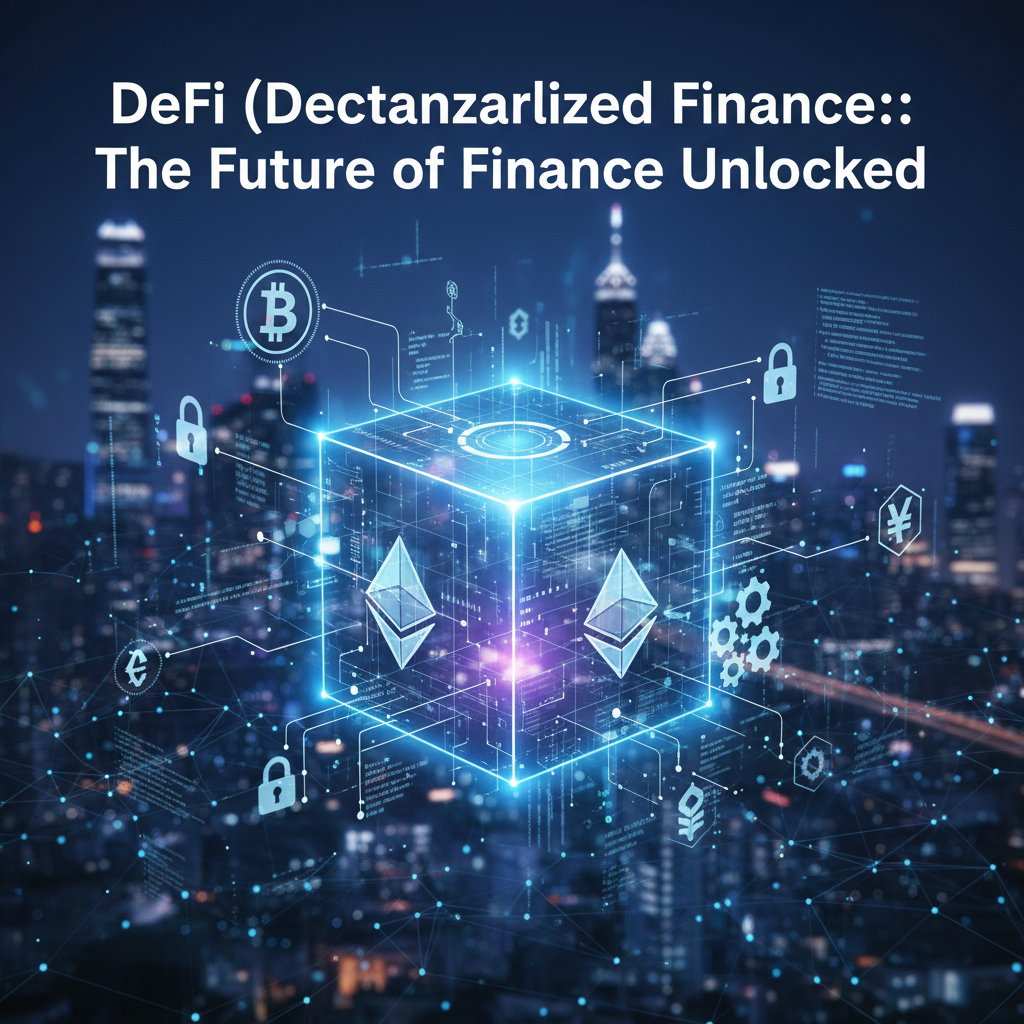
At its core, Decentralized Finance (DeFi) refers to an ecosystem of financial applications built on blockchain technology. Unlike traditional finance, which relies on centralized institutions such as banks and brokers, DeFi operates without intermediaries. Instead, it leverages smart contracts – self-executing contracts with the terms of the agreement directly written into code – to automate and secure financial transactions. This fundamental shift means that users can interact with financial services directly, peer-to-peer, without needing to trust or go through a central authority. The movement is largely powered by public blockchains like Ethereum, which provide a robust, transparent, and immutable ledger for these applications.
DeFi’s primary goal is to democratize finance, making services like lending, borrowing, trading, and insurance accessible to anyone with an internet connection, regardless of their location or socioeconomic status. This stands in stark contrast to the traditional financial system, which often has high barriers to entry, lengthy approval processes, and geographical limitations. By removing these gatekeepers, DeFi promises a more open, efficient, and equitable financial landscape.
Key Pillars of the DeFi Ecosystem
The DeFi ecosystem is vast and continually expanding, but several key components form its backbone:
- Decentralized Exchanges (DEXs): These platforms allow users to trade cryptocurrencies directly with each other without the need for a centralized exchange to hold their funds. DEXs like Uniswap and Curve utilize Automated Market Makers (AMMs), which rely on liquidity pools funded by users, enabling seamless swaps of digital assets.
- Lending and Borrowing Protocols: Platforms such as Aave and Compound enable users to lend out their crypto assets to earn interest or borrow assets by providing collateral. These loans are typically over-collateralized and managed entirely by smart contracts, ensuring transparency and security.
- Yield Farming and Liquidity Mining: A popular strategy in DeFi, yield farming involves locking up cryptocurrencies in a protocol to provide liquidity or stake assets, in return for rewards in the form of additional cryptocurrencies. Liquidity providers are crucial for DEXs and lending protocols, earning a share of transaction fees or newly minted tokens.
- Stablecoins: These cryptocurrencies are designed to minimize price volatility by pegging their value to a stable asset, like the US dollar (e.g., USDC, DAI). Stablecoins are vital for the DeFi ecosystem, providing a stable medium of exchange and a safe haven during market volatility, enabling more predictable financial operations.
- Asset Tokenization: DeFi is moving towards tokenizing real-world assets, from real estate to commodities, bringing them onto the blockchain. This allows for fractional ownership, increased liquidity, and easier transferability of assets that were traditionally illiquid.
- Decentralized Insurance: Protocols like Nexus Mutual offer decentralized insurance coverage against smart contract bugs, hacks, or other risks within the DeFi space, providing a crucial safety net for participants.
The Revolutionary Advantages of DeFi
DeFi brings several compelling advantages that could redefine the future of finance:
- Financial Inclusion and Accessibility: Anyone with an internet connection and a crypto wallet can access DeFi services, breaking down geographical and institutional barriers. This opens up financial opportunities for the unbanked and underbanked populations worldwide.
- Transparency and Auditability: All transactions on public blockchains are transparent and immutable. This means users can audit transactions and verify the integrity of the system, fostering trust and accountability that is often lacking in traditional finance.
- Efficiency and Lower Costs: By eliminating intermediaries and automating processes with smart contracts, DeFi can significantly reduce transaction fees and processing times, making financial services more efficient and affordable.
- User Control and Sovereignty: In DeFi, users maintain full custody of their assets (via non-custodial wallets), unlike traditional banks where funds are held by the institution. This gives users greater control and eliminates the risk of institutional mismanagement or censorship.
- Innovation and Composability: DeFi protocols are often open-source and interoperable, allowing developers to build new applications by combining existing ones – a concept known as ‘money legos.’ This fosters rapid innovation and the creation of novel financial products and services.
Navigating the Challenges and Risks in DeFi
Despite its promise, DeFi is not without its hurdles and risks, which users must be aware of:
- Security Vulnerabilities: Smart contracts, while powerful, are complex and can contain bugs or vulnerabilities that malicious actors can exploit. Hacks and exploits have led to significant losses for users and protocols.
- Market Volatility: The underlying crypto assets used in DeFi are often highly volatile. This volatility can lead to rapid fluctuations in the value of collateral, potential liquidations, and significant losses for liquidity providers (e.g., impermanent loss).
- Scalability Issues: Many DeFi applications run on networks like Ethereum, which can experience congestion and high transaction fees during peak times. While Layer 2 solutions are emerging, scalability remains a challenge for mainstream adoption.
- Regulatory Uncertainty: The regulatory landscape for DeFi is still evolving globally. A lack of clear regulations can create uncertainty for both developers and users, and potential future restrictions could impact the ecosystem.
- User Experience and Complexity: For newcomers, the DeFi interface can be intimidating and complex. Understanding concepts like gas fees, wallet management, and various protocol mechanics requires a learning curve, hindering broader adoption.
- Lack of Consumer Protection: Unlike traditional finance, there are generally no central authorities or deposit insurance schemes in DeFi. If a protocol fails or is exploited, users typically have little recourse to recover lost funds.
The Future Landscape of Decentralized Finance
The trajectory of DeFi points towards continued growth and maturation, with several key trends shaping its future:
- Enhanced Interoperability: Future DeFi will likely see greater cross-chain compatibility, allowing assets and protocols to interact seamlessly across different blockchains. This will expand the reach and liquidity of the ecosystem.
- Institutional Adoption: As the space matures and regulatory clarity improves, traditional financial institutions are expected to increase their involvement in DeFi, bringing significant capital and expertise. We’re already seeing interest in tokenized assets and private DeFi solutions.
- Layer 2 Scaling Solutions: Technologies like rollups (optimistic and zero-knowledge) are crucial for addressing current scalability issues, promising faster transactions and lower fees, making DeFi more practical for everyday use.
- Improved User Experience: Developers are focused on creating more intuitive and user-friendly interfaces, abstracting away much of the underlying technical complexity to make DeFi accessible to a broader, non-technical audience.
- Real-World Asset Integration: Bridging the gap between traditional finance and DeFi will involve more tokenization of real-world assets, allowing for new forms of collateral, lending, and investment opportunities.
- Regulatory Framework Development: Governments and financial bodies worldwide are actively working on developing comprehensive regulatory frameworks for cryptocurrencies and DeFi. While this presents challenges, it will ultimately bring legitimacy and stability to the sector, fostering mainstream trust and adoption.


 By
By